
https://www.thegoodproject.org/dilemmas-database
https://artsandculture.google.com/explore
https://www.nationalgeographic.com
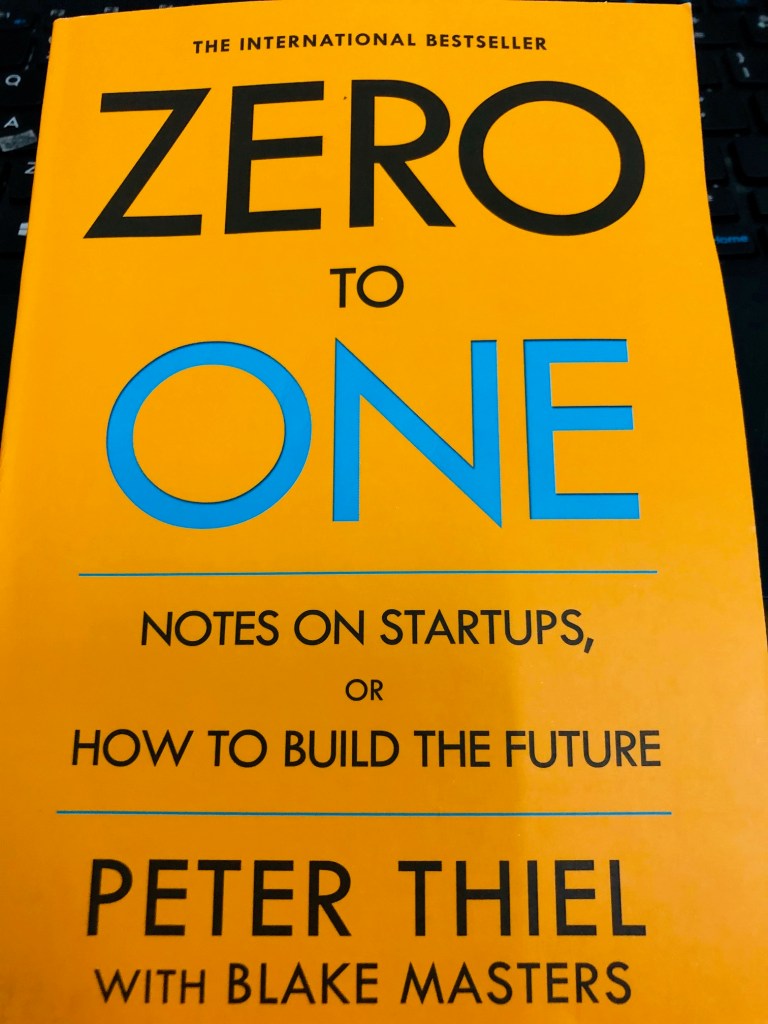
ZERO TO ONE: Peter Thiel
7 Questions Every Business Must Answer
1. The Engineering question:
Can you create breakthrough technology instead of incremental improvements?
Youtube (tutorial videos), blog posts, SNS, Projector etc.
2. The Timing Question
Is now the right time to start your particular business?
Not yet. Still lots to learn while working at ILBC. (Prospects there with increased demand for online learning with advent of coronavirus)
3. The Monopoly Question
Are you starting with a big share of small market? (Avoiding competition)
Literature and English seems to be relatively less competitive market. International schools (in Myanmar) seem to be niche market I could get started with at the moment.
4. The People Question
Do you have the right team?
Yes. The ILBC has a great team that I could very much rely on ask for help and support. If I were to start my own startup (online/offline education) I would require a team of people with the same vision to work together.
5. The Distribution Question
Do you have a way to not just create but deliver your product?
Offline school/ Online E-learning platform as a possibility
6. The Durability Question
Will your market position be defensible 10 and 20 years into the future?
Online learning seems to have become the trend with the pandemic. Education stressing importance of creativity, empathy, what it means to learn seems to be the new trend with the predicted changes in the job market and society with advent of AI and increased technological advances.
7. The Secret Question
Have you identified a unique opportunity that others don’t see?
Prospects of Online programs?
3. Economies of Scale
A monopoly business gets stronger as it gets bigger: the fixed costs of creating a product (engineering, management, office space) can be spread out over ever greater quantities of sales. Software startups can enjoy especially dramatic economies of scale because the marginal cost of producing another copy of the product is close to zero.
Many businesses gain only limited advantages as they grow to large scale. Service businesses especially are difficult to make monopolies. If you won a yoga studio, for example, you’ll only be able to serve a certain number of customers. You can hire more instructors and expand to more locations, but your margins will remain fairly low and you’ll never reach a point where a core group of talented people can provide something of value to millions of separate clients, as software engineers are able to do so.
A good startup should have the potential for great scale built into its first design. It doesn’t need to add too many customized features in order to acquire more, and there’s no inherent reason why it should ever stop growing.
4. Branding: A company has a monopoly on its won brand by definition, so creating a strong brand is a powerful way to claim a monopoly. Today’s strongest tech brand is Apple: the attractive looks and carefully chosen materials of products like the iPhone and MacBook, the Apple Stores’ sleep minimalist design and close control over the consumer experience, the omnipresent advertising campaigns, the price positioning as a maker of premium goods, and the lingering nimbus of Steve Job’s personal charisma all contribute to a perception that Apple offers products so good as to constitute a category of their own.
Many have tried to learn from Apple’s success: paid advertising, branded stores, luxurious materials, playful keynote speeches, high prices, and even minimalist design are all susceptible to imitation. But these techniques for polishing the surface don’t work without a strong underlying substance. Apple has a complex suite of proprietary technologies, both in hardware (like superior touchscreen materials) and software (like touchscreen interfaces purpose – designed for specific materials). It manufactures products a scale large enough to dominate pricing for the materials it buys. And it enjoys strong network effects from its content ecosystem: thousands of developers write software for Apple devices because that’s where hundreds of millions of users are, and those users stay on the platform because it’s where the apps are. These other monopolistic advantages are less obvious than Apple’s sparkling brand, but they are fundamentals that let the branding effectively reinforce Apple’s monopoly.
Start Small and Monopolize
Every startup is small at the start. Every monopoly dominates a large share of its market. Therefore, every startup should start with a very small market. Always err on the side of starting too small. The reason is simple: it’s easier to dominate small market than a large one. If you think your initial market might be too big, it almost certainly is. Small doesn’t mean nonexistent.
Sequencing markets correctly is underrated, and its takes discipline to expand gradually . The most successful companies make the core progression – to dominate a specific niche and then scale to adjacent markets – a part of their founding narrative.
Don’t Disrupt
The concept was coined to describe threats to incumbent companies, so startups’ obsession with disruption means they see themselves through older firm’s eyes. If you think of yourself as an insurgent battling dark forces, it’s easy to become unduly fixated on the obstacles in your path. But if you truly want to make something new, the act of creation is far more important than the old industries that might not like what you create. Indeed, if your company can be summed up by its opposition to already existing firms, it can’t be completely new and it’s probably not going to become a monopoly.
As you craft a plan to expand to adjacent markets, don’t disrupt: avoid competition as much as possible.
The last will be first.
You’ve probably head about “first mover advantage”: if you’re the first entrant into a market, you can capture significant market share while competitors scramble to get started. But moving first is a tactic, not a goal. What really matters is generating cash flows in the future, so being the first mover doesn’t do you any good if someone else comes along and unseats you. It’s much better to be the last mover – that is, to make the last great development in a specific market and enjoy years or even decades of monopoly profits. The way to do that is to dominate a small niche and scale up from there, toward your ambitious long-term vision. In this one particular at least, business is like chess. Grandmaster Jose Raul Capablanca put it well: to succeed, “you must study the endgame before anything else.”
What do successful people say? Malcolm Gladwell, a successful author who write about successful people, declares in Outliers that success results from a “patchwork of lucky breaks and arbitrary advantages.” Warren Buffett famously considers himself a “member of a lucky sperm club”… Bill Gates even goes so far as to claim that he “was lucky to be born with certain skills,” though it’s not clear whether that’s actually possible.
Perhaps the guys are being strategically humble. However, the phenomenon of serial entrepreneurship would seem to call into question our tendency to explain success as the product of chance. Hundreds of people have started multimillion-dollar businesses. A few, like Steve Jobs, Jack Dorsey, and Elon Musk, have created several multibillion-dollar companies. If success were mostly a matter of luck, these kinds of serial entrepreneurs probably wouldn’t exist.
Success is never accidental, said all multimillionaire white men. It’s true that already successful people have an easier time doing new things, whether due to their networks, wealth, or experience. But perhaps we’ve become too quick to dismiss anyone who claims to have succeeded according to plan.
Statistics doesn’t work when the sample size is one.
From the Renaissance and the Enlightenment to the mid-20th century, luck was something to be mastered, dominated and controlled
Did Bill Gates simply win the intelligence lottery? Was Sheryl Sandberg born with a silver spoon, or did she “lean in”? When we debate historical questions like these, luck is in the past tense. Far more important are questions about the future: is it a matter of chance or design?
You can expect the future to take a definite form or you can treat it as hazily uncertain. If you treat the future as something definite, it makes sense to understand it in advance and to work to shape it.
In middle school, “we’re encouraged to start hoarding “extracurricular activities” In high school ambitious students compete even harder to appear omnicompetent. By the time a student gets to college, he’s spent a decade curating a bewilderingly diverse resume to prepare for a completely unknowable future. Come what may, he’s ready – for nothing in particular.
A definite view, by contrast, favors firm convictions. Instead of pursuing many-sided mediocrity and calling it “well-roundedness” a definite person determines the one best thing to do and then does it. Instead of working tirelessly to make herself indistinguishable, she strives to be great at something substantive – to be a monopoly of one. This is not what young people do today, because everyone around them has long since lost faith in a definite world. No one gets into Stanford by excelling at just one thing, unless that thing happens to involve throwing or catching a leather ball.
Indefinite pessimism: Every culture has a myth of decline from some golden age, and almost all people throughout history have bene pessimists. Even today pessimism still dominates huge parts of the world. An indefinite pessimist looks out onto a bleak future, but he has no idea what to do about it. This describes Europe since the early 1970s, when the continent succumbed to undirected bureaucratic drift. Today the whole Eurozone is in slow-motion crisis, and nobody is in charge. The European Central Bank doesn’t stand for anything but improvisation: the U.S Treasury prints “In God We Trust” on the dollar; the ECB might as well print “Kick the Can Down the Road’ on the euro. Europeans just react to events as they happen and hope things don’t get worse. The indefinite pessimist can’t know whether the inevitable decline will be fast or slow, catastrophic or gradual. All he can do is wait for it to happen, so he might as well eat, drink, and be merry in the meantime: hence Europe’s famous vacation mania.
Definite pessimism: A definite pessimist believes the future can be known, but since it will be bleak, he must prepare for it. Perhaps surprisingly, China is probably the most definitely pessimistic place in the world today. When Americans see the Chinese economy grow ferociously fast (10% per year since 2000), we imagine a confident country mastering its future. From China’s viewpoint, economic growth cannot come fast enough. Every other country is afraid that China is going to take over the world; China is the only country afraid that it won’t.
China can grow so fast only because its starting base is so low. The easiest way for China to grow is relentlessly copy what has already worked in the West. And that’s exactly what it’s doing: executing definite plans by burning ever more coal to build ever more factories and skyscrapers. But with a huge population pushing resource prices higher, there’s no way Chinese living standards can ever actually catch up to those of the richest countries, and the Chinese know it.
This is why the Chinese leadership is obsessed with the way in which things threaten to get worse. Every senior Chinese leader famine as a child, so when the Politburo looks to the future, disaster is not an abstraction. The Chinese public, too, knows that winter is coming. Outsiders are fascinated by the great fortunes being made inside China, but they pay less attention to the wealthy Chinese trying hard to get their money out of the country. Poor Chinese just save everything they can and hope it will be enough.
Definite Optimism
To a definite optimist, the future will be better than the present if he plans and works to make it better. From the 17th century through the 1950s and 60s, definite optimists led the Western world. Scientists, engineers, doctors, and businessmen made the world richer, healthier, and more long-lived than previously imaginable. As Karl Marx and Friedrich Engels saw clearly, the 19th century business class
Created more massive and more colossal productive
Forces than all preceding generations together
Subjection of Nature’s forces to man, machinery
Application of chemistry to industry and agriculture,
Steam-navigation, railways, electric telegraphs,
Clearing of whole continents of cultivation, canalization
Of rivers, whole populations conjured out of the ground – what earlier century had even a presentiment
That such productive forces slumbered in the lap of
Social labor?
Each generation’s inventors and visionaries surpassed their predecessors. In 1843, the London public was invited to make its first crossing underneath the River Thames by a newly dug tunnel. In 1869, the Suez canal saved Eurasian shipping traffic from rounding of Cape of Good Hope. Even the Great Depression failed to impeded relentless progress in the United States, which has always been home to eh world’s most far-seeing definite optimists.
The Golden Gate Bridge was started in 1933 and competed in 1937. The Manhattan Project was started in 191 and had already produced the world’s first nuclear bomb by 1945. (Nasa’s Apollo Program in 1961)
Bold plans were not reserved just for political leaders or government scientists. In the late 1940s, a Californian named John Reber set out to reinvent the physical geography of the whole San Francisco Bay Area. Reber was a schoolteacher, an amateur theater producer, and a self-taught engineer. Undaunted by his lack of credentials, he publicly proposed to build two huge dams in the Bay, construct massive freshwater lakes for drinking water and irrigation, and reclaim 20,000 acres of land for development. Even though he had no personal authority, people took the Reber Plan seriously. It was endorsed by newspaper editorial board across Californian. The U.S Congress held hearing on its feasibility. The Army Corps of Engineers even constructed a 1.5 acre scale model of the Bay in a cavernous Sausalito warehouse to simulate it. These tests revealed technical shortcomings, so the plan wasn’t executed.
But would anybody today take such a vision seriously in the first place? In the 1950s, people welcomed big plans and asked whether they would work. Today a grand plan coming from a schoolteacher would be dismissed as crankery, and a long-range vision coming from anyone more powerful would be derided as hubris. You can still visit the Bay Model in that Sausalito warehouse, but today it’s just a tourist attraction: big plans for the future have become archaic curiosities.
Indefinite Optimism: After a brief pessimistic phase in the 1970s, indefinite optimism has dominated American thinking every since 1982, when a long bull market began and financed eclipsed engineering as the way to approach the future. To an indefinite optimist, the future will be better, but he doesn’t know how exactly, so he won’t make any specific plans. He expects to profit from the future but sees no reason to design it concretely.
Malcolm Gladwell says you can’t understand Bill Gates’s success without understanding his fortunate personal context: he grew up in a good family, went to a private school equipped with a computer lab, and counted Paul Allen as a childhood friend. But perhaps you can’t understand Malcolm Gladwell without understanding his historical context as a Boomer. When Baby Boomers grow up and write books to explain why one or another individual is successful, they point to the power of a particular individuals’ context as determined by chance. But they miss the even bigger social context for their own preferred explanations: a whole generation learned from childhood to overrate the power of chance and underrate the importance of planning. Gladwell at first appears to be making a contrarian critique of the myth of the self-made businessman, but actually his own account encapsulates the conventional view of a generation.
Indefinite Finance
But in a indefinite world, people actually prefer unlimited optionality; money is more valuable than anything you could possibly do with it. Only in a definite future is money a means to an end, not the end itself.
To increase discretionary spending we’d need definite plans to solve specific problems.
Indefinite Philosophy
The philosophy of the ancient world was pessimistic: Plato, Aristotle, Epicurus, and Lucretius all accepted strict limits on human potential. The only question was how best to cope with our tragic fate. Modern philosophers have been mostly optimistic. From Herbert Spencer on the right and Hegel in the center to Marx on the left, the 19th century shared a belief in progress. (Remember Marx and Engels’s encomium to the technological triumphs of capitalism from page 65). These thinkers expected material advances to fundamentally change human life for the better: they were definite optimists.
But iteration without a bold plan won’t take you from 0 to 1. A company is the strangest place of all for an indefinite optimist: why should you expect your own business to succeed without a plan to make it happen? Darwinism may be a fine theory in other contexts, but in startups, intelligent design works best.
The Return of Design
What would it mean to prioritize design over chance? Today, “good design” is an aesthetic imperative, and everybody from slackers to yuppies carefully “curates” their outward appearance. It’s true that every great entrepreneur is first and foremost a designer.
A startup is the largest endeavor over which you can have definite mastery. You can have agency not just over your own life, but over a small and important part of the world. It begins by rejecting the unjust tyranny of Chance. You are not a lottery ticket.
Follow the Money
Money makes money. “For whoever has will be given more, and they will have an abundance. Whoever does not have, even what they have will be taken from them” (Matthew 25:29) Albert Einstein made the same observation when he stated that compound interest was “the eighth wonder of the world” “the greatest mathematical discovery of all time,” or even “the most powerful force in the universe.” Whichever version you prefer, you can’t miss his message: never underestimate exponential growth. Actually, there’s no evidence that Einstein ever said any of those things – the quotations are all apocryphal. But this very misattribution reinforces the message: having invested the principal of a lifetime’s brilliance, Einstein continues to earn interest on it form beyond the grave by receiving credit for things he never said.
The “Pareto principle,” or the 80-20 rule, when he noticed that 20% of the people owned 80% of the land in Italy
Whatever Einstein did or didn’t say, the power law – so named because exponential equations describe severely unequal distributions – is the law of the universe. It defines our surroundings so completely that we usually don’t even see it.
This chapter shows how the power law becomes visible when you follow the money: in venture capital, where investors try to profit from exponential growth in early-stage companies, a few companies attain exponentially greater value than all others. Most businesses never need to deal with venture capital, but everyone needs to know exactly one thing that even venture capitalists struggle to understand: we don’t live in a normal world; we live under a power law.
The Power Law of Venture Capital
Venture capitalists aim to identify, fund, and profit from promising early-stage companies. They raise money from institutions and wealthy people, pool it into a fund, and invest in technology companies that they believe will become more valuable. Venture funds usually have a 10year lifespan since it takes time for successful companies to grow and “exit”
When the successful portfolio companies hit their exponential growth spurts and start to scale.
The big question is when this takeoff will happen. For most funds, the answer is never. Most startups fail, and most funds fail with them. Every VC knows that his task is to find the companies that will succeed. However, even seasoned investors understand this phenomenon only superficially. They know companies are different, but they underestimate the degree of difference.
The error lies in expecting that ventures returns will be normally distributed: that is, bad companies will fail, mediocre ones will stay flat, and good ones will return 2x or even 4x. Assuming this bland pattern, investors assemble a diversified portfolio and hope that winners counterbalance losers.
But this “spray and pray” approach usually produces an entire portfolio of flops, with no hits at all. This is because venture returns don’t follow a normal distribution overall. Rather, they follow a power law: a handful of companies radically outperform all others. If you focus on diversification instead of single-minded pursuit of the very few companies that can become overwhelmingly valuable, you’ll miss those rare companies in the first place.
This graph shows the stark reality versus the perceived relative homogeneity:
Why People Don’t see the Power Law
When you choose a career, you act on your belief that the kind of work you do will be valuable decades from now.
But life is not a portfolio: not for a startup founder, and not for an individual. An entrepreneur cannot “diversify” herself: you cannot run dozens of companies at the same time and then hope that one of them works out well. Less obvious but just as important, an individual cannot diversify his own life by keeping dozens of equally possible careers in ready reserve.
Our schools teach the opposite: institutionalized education traffics in a kind of homogenized, generic knowledge. Everybody who passes through the American school system learns not to think in power law terms. Every high school course period lasts 45 minutes whatever the subject. Every student proceeds at a similar pace. At college, model students obsessively hedge their futures by assembling a suite of exotic and minor skills. Every university believes in “excellence” and hundred page course catalogs arranged alphabetically according to arbitrary departments of knowledge seem designed to reassure you that “it doesn’t matter what you do, as longa you do it well.” That is completely false. It does matter what you do. You should focus relentlessly on something you’re good at doing, but before that you must think hard about whether it will be valuable in the future.
For the startup world, this means you should not necessarily start your own company, even if you are extraordinarily talented. If anything, too many people are starting their own companies today. People who understand the power law will hesitate more than others when it comes to founding a new venture: they know how tremendously successful they could become by joining the very best company while it’s growing fast. The power law means that differences between companies will dwarf the differences in roles inside companies. You could have 100% of the equity if you fully fund your own venture, but if it fails you’ll have 100% of nothing. Owning just 0.01% of Google, by contrast, is incredibly valuable (more than $35 million as of this writing)
If you do start your own company, you must remember the power law to operate it well. The most important things are singular: One market will probably be better than all others, as we discussed in Chapter 5. One distribution strategy usually dominates all others, too – for that see Chapter 11. Time and decision-making themselves follow a power law to accurately frame your decisions for you, so what’s most important is rarely obvious. It might even be secret. But in a power law world, you can’t afford not to think hard about where your actions will fall on the curve.
Secrets; but it won’t give you an edge. It’s not a secret.
Remember our contrarian question: what important truth do very few people agree with you on? If we already understand as much of the natural world as we ever will – if all of today’s conventional ideas are already enlightened, and if everything has already been done – then there are no good answers.
Recall the business version of our contrarian question: what valuable company is nobody building? Every correct answer is necessarily a secret: something important and unknown, something hard to do but doable. If there are many secrets left in the world, there are probably many world-changing companies yet to be started. This chapter will help you think about secrets and how to find them.
He divided human goals into three groups:
This is the classic trichotomy of the easy, the hard, and the impossible. Kaczynski argued that modern people are depressed because all the world’ hard problems have already been solved. What’s left to do is either easy or impossible, and pursuing those tasks is deeply unsatisfying. What you can do, even a child can do; what you can’t do, even Einstein couldn’t have done. So Kaczynski’s ideas was to destroy existing institutions, get rid of all technology, and let people start over and work on hard problems anew.
If everything worth doing has already been done, you may as well feign an allergy to achievement and become a barista.
Why has so much of our society come to believe that there are no hard secrets left? It might start with geography. There are no blank spaces left on the map anymore.
Along with the natural fact that physical frontiers have receded, four social trends have conspired to root our belief in secrets. First is incrementalism. From an early age, we are taught that the right way to do things is to proceed one very small step at a time, day by day, grade by grade. If you overachieve and end up learning something that’s not on the test, you won’t receive credit for it.
Second is risk aversion. By definition , a secret hasn’t been vetted by the mainstream. If your goal is to never make a mistake in your life, you shouldn’t look for secrets. The prospect of being lonely but right – dedicating your life to something that no one else believes in – is already hard. The prospect of being lonely and wrong can be unbearable.
Third is complacency. Social elites have the most freedom and ability to explore new thinking, but they seem to believe in secrets the least. Why search for a new secret if you can comfortably collect rents on everything that has already been done? Every fall, the deans at top law schools and business schools welcome the incoming class with the same implicit message: “You got into this elite institution. Your worries are over. You’re set for life.” But that’s probably the kind of thing that’s true only if you don’t believe it.
Fourth is “flatness”. As globalization advances, people perceive the world as one homogenous, highly competitive marketplace: the world is “flat” Given that assumption, any one who might have had the ambition to look for a secret will first ask himself: if it were possible to discover something new, wouldn’t someone from the faceless global talent pool of smarter and more creative people have found it already? This voice of doubt can dissuade people from even starting to look for secrets in a world that seems too big a place for any individual to contribute something unique.
Forty years ago, people were more open to the idea that not all knowledge was widely known. From the Communist Party to the Hare Krishnas, large number of people thought they could join some enlightened vanguard that would show them the Way. Very few people take unorthodox ideas seriously today, and the mainstream sees that as a sign of progress. We can be glad that there are fewer crazy cults now, yet that gain has come at great cost
For example, a world without secrets would enjoy a perfect understanding of justice. Every injustice necessarily involves a moral truth that very few people recognize early on: in a democratic society, a wrongful practice persist only when most people don’t perceive it to be unjust. At first, only a small minority of abolitionists knew that slavery was evil; that view has rightly become conventional, but it was still a secret in the early 19th century. To say that there are no secrets left today would mean that we live in a society with no hidden injustices.
In economics, disbelief in secrets leads to faith in efficient markets. But the existence of financial bubbles shows that markets can have extraordinary inefficiencies. (And the more people believe in efficiency, the bigger the bubble get. In 1999, nobody wanted to believe that the internet was irrationally valued.
You can’t find secrets without looking for them. Andrew Wiles demonstrated this when the proved Fermat’s Last Theorem
He needed brilliance to succeed, but he also needed a faith in secrets. If you think something hard is impossible, you’ll never even start trying to achieve it. Belief in secrets is an effective truth.
The actual truth is that there are many more secrets left to find, but they will yield only to relentless searchers. There is more to do in science, medicine, engineering, and in technology of all kinds. We are within reach not just of marginal goals set at the competitive edge of today’s conventional disciplines, but of ambitions so great that even the boldest minds of the Scientific Revolution hesitated to announce them directly. We could cure cancer, dementia, and all the diseases of age and metabolic decay. We can find new ways to generate energy that free the world from conflict over fossil fuels. We can invent faster ways to travel from place to place over the surface of the planet; we can even learn how to escape it entirely and settle new frontiers. But we will never learn any of these secrets unless we demand to know them and force ourselves to look.
How to find secrets
There are two kinds of secrets: secrets of nature and secrets about people
What secrets is nature not telling you? What secrets are people not telling you?
The people who look for them can sound intimidatingly authoritative. This is why physics PhDs are notoriously difficult to work with – because they know the most fundamental truths, they think they know all truths. But does understanding electromagnetic theory automatically make you a great marriage counselor? Does a gravity theorist now more about your business than you do? At PayPal, I once interviewed a physics PhD for an engineering job. Halfway through my first question, he shouted, “Stop! I already know what you’re going to ask!” But he was wrong. It was the easiest no-hire decision I’ve ever made.
Secrets about people are relatively underappreciated. Maybe that’s because you don’t need a dozen years of higher education to ask the questions that uncover them: What are people not allowed to talk about? What is forbidden or taboo?
Sometimes looking for natural secrets and looking for human secrets lead to the same truth. Consider the monopoly secret again: competition and capitalism are opposites. If you didn’t already know it, you could discover it the natural, empirical way: do a quantitative study of corporate profits and you’ll see they’re eliminated by competition. But you could also take the human approach and ask: what are people running companies not allowed to say? You could notice that monopolists downplay their monopoly status to avoid scrutiny, while competitive firms strategically exaggerate their uniqueness. The differences between firms only seem small on the surface; in fact, they are enormous.
The best place to look for secrets is where no one else is looking. Most people think only in terms of what they’ve been taught: schooling itself aims to impart conventional wisdom. So you might ask: are there any fields that matter but haven’t been standardized and institutionalized? Physics, for example, is a real major at all major universities, and it’s set in its ways. The opposite of physics might be astrology, but astrology doesn’t matter.
What to do with Secrets
If you find a secret, you face a choice: Do you tell anyone? Or do you keep it to yourself?
It depends on the secret: some are more dangerous than others. As Faust tells Wagner:
The few who knew what might be learned ,
Foolish enough to put their whole heart on show,
And reveal their feelings to the crowd below,
Mankind has always crucified and burned
Unless you have perfectly conventional beliefs, it’s rarely a good idea to tell everybody everything that you know.
So who do you tell? Whoever you need to, and no more. In practice there’s always a golden mean between telling nobody and telling everybody – and that’s a company. The best entrepreneurs know this: every great business is built around a secret that’s hidden from the outside. A great company is a conspiracy to change the world; when you share your secret, the recipient becomes a fellow conspirator.
As Tolkien wrote in The Lord of the Rings:
The Road goes ever on and on
Down from the door where it began
Life is a long journey; the road marked out by the steps of previous travelers has no end in sight. But later on in the tale, another verse appears:
Still around the corner there may wait
A new road or a secret gate,
And though we pass them by today,
Tomorrow we may come this way
And take the hidden paths that run
Towards the Moon or to the Sun
The road doesn’t have to be infinite after all. Take the hidden paths.
Foundations
Every great company is unique, but there are a few things that every business must get right at the beginning. I stress this so often that friends have teasingly nicknamed it “Thiel’s Law” a startup messed up at its foundation cannot be fixed.
Beginnings are special. They are qualitatively different from all that comes afterward. This was true 13.8 billion years ago, at the founding of our cosmos: in the earliest microseconds of its existence, the universe expanded by a factor of 10^30 – a million trillion trillion.
Companies are like countries in this way. Bad decisions made early on – if you choose the wrong partners or hire the wrong people, for example – are very hard to correct after they are made. It may take a crisis on the order of bankruptcy before anybody will even try to correct them. As a founder, your first job is to get the first things right, because you cannot build a great company on a flawed foundation.
When you start something, the first and most crucial decision you make is whom to start it with. Choosing a co-founder is like getting married, and founder conflict is just as ugly as divorce. Optimism abounds at the start of every relationship. It’s unromantic to think soberly about what could go wrong, so people don’t. But if the founders develop irreconcilable differences, the company becomes the victim.
Ownership, Possession, and Control
It’s not just founders who need to get along. Everyone in your company needs to work well together. A Silicon Valley libertarian might say you could solve this problem by restricting yourself to a sole proprietorship. Freud, Jung, and every other psychologist has a theory about how every individual mind is divided against itself, but in business at least, working for yourself guarantees alignment. Unfortunately, it also limits what kind of company you can build. It’s very hard to go from 0 to 1 without a team.
Unlike corporate giants, early-stage startups are small enough that founders usually have both ownership and possession. Most conflicts in a startup erupt between ownership and control – that is, between founders and investors on the board. The potential for conflict increases over time as interests diverge: a board member might want to take a company public as soon as possible to score a win for his venture firm, while the founders would prefer to stay private and grow the business.
IN the boardroom, less is more. The smaller the board, the easier it is for the directors to communicate, to reach consensus, and to exercise effective oversight. However, that very effectiveness means that a small board can forcefully oppose management in any conflict. This is why it’s crucial to choose wisely: every single member of your board matters. Even one problem director will cause you pain, and may even jeopardize your company’s future.
A board of three is ideal. Your board should never exceed five people, unless your company is publicly held (Government regulations effectively mandate that public companies have larger boards – the average is nine members) BY far the worst you can do is to make your board extra large. When unsavvy observers see a nonprofit organization with dozens of people on its board, they think: “Look how many great people are committed to this organization! It must be extremely well run.” If you want an effective board, keep it small.
At the margin, they’ll be biased to claim value in the near term, not help you create more in the future. That’s why hiring consultants doesn’t work. Part time employees don’t work. Even working remotely should be avoided, because misalignment can creep in whenever colleagues aren’t together full-time, in the same place, every day. IF you’re deciding whether to bring someone on board, the decision is binary. Ken Kesey was right: you’re either on the bus or off the bus.
I ask him how much he intends to pay himself. A company does better the less it pays the CEO – that’s one of the single clearest patterns I’ve noticed from investing in hundreds of startups.
High pay incentivizes him to defend the status quo along with his salary, not to work with everyone else to surface problems and fix them aggressively. A cash-poor executive, by contrast, will focus on increasing the value of the company as a whole.
Cash is attractive. It offers pure optionality: once you get your paycheck, you can do anything you want with it. However, high cash compensation teaches workers to claim value from the company as it already exists instead of investing their time to create new value in the future. A cash bonus is slightly better than a cash salary – at least it’s contingent on a job well done. But even so-called incentive pay encourages short-term thinking and value grabbing. Any kind of cash is more about the present than the future.
Startups don’t need to pay high salaries because they can offer something better: part ownership of the company itself. Equity is the one form of compensation that can effectively orient people toward creating value in the future.
However, for equity to create commitment rather than conflict, you must allocate it very carefully. Giving everyone equal shares is usually a mistake: every individual has different talents and responsibilities as well as different opportunity costs, so equal accounts will seem arbitrary and unfair from the start. On the other hand, granting different amounts up front is just as sure to seem unfair. Resentment at this stage can kill a company, but there’s not ownership formula to perfectly avoid it.
Since it’s impossible to achieve perfect fairness when distributing ownership, founders would do well to keep the details secret. Sending out a companywide email that lists everyone ownership take would be like dropping a nuclear bomb on your office.
Equity is a powerful tool precisely because of these limitations. Anyone who prefers owning a part of your company to being paid in cash reveals a preference for the long term and a commitment to increasing your company’s value in the future. Equity can’t create perfect incentives, but it’s the best way for a founder to keep everyone in the company aligned.
Extending the Founding
Bob Dylan has said that he who is not busy being born is busy dying. If he’s right, being born doesn’t happen at just one moment – you might even continue to do it somehow, poetically at least. The founding moment of a company, however, really does happen just once; only at the very start do you have the opportunity to set the rules that will align people toward the creation of value in the future.
The most valuable kind of company maintains an openness to invention that is most characteristic of beginnings. This leads to a second, less obvious understanding of the founding: it lasts as long as a company is creating new things, and it ends when creation stops. If you get the founding moment right, you can do more than create a valuable company: you can steer its distant future toward the creation of new things instead of the stewardship of inherited success. You might even extend its founding indefinitely.
The Mechanics of Mafia
Start with a thought experiment: what you would the ideal company culture look like? Employees should love their work. They should enjoy going to the office so much that formal business hours become obsolete and nobody watches the clock. The workspace should be open, not cubicled, and workers should feel at home: beanbag chairs and Ping-Pong tables might outnumber file cabinets. Free massages, on-site sushi chefs, and maybe even yoga classes would sweeten the scene. Pets should be welcome, too: perhaps employees’ dogs and cats could come and join the office’s tankful or tropical fish as unofficial company mascots.
What’s wrong with this picture? It includes some of the absurd perks Silicon Valley has made famous, but none of the substance – and without substance perks don’t work. You can’t accomplish anything meaningful by hiring an interior decorator to beautify your office, a “human resources” consultant to fix your policies, or a branding specialist to hone your buzzwords. “Company culture” doesn’t exist apart from the company itself: no company has a culture; every company is a culture. A startup is a team of people on a mission, and a good culture is just what that looks like on the inside.
We didn’t assemble a mafia by sorting through resumes and simply hiring the most talented people. I had seen the mixed results of that approach firsthand when I worked at a New York law firm. The lawyers I worked with ran a valuable business, and they were impressive individuals one by one. But the relationships between them were oddly thin. They spent all day together, but few of them seemed to have much to say to each other outside the office. Why work with a group of people who don’t even like each other?
Many seem to think it’s a sacrifice necessary for making money. But taking a merely professional view of the workplace, in which free agents check in and out on a transactional basis, is worse than cold: it’s not even rational. Since time is your most valuable asset, it’s odd to spend it working with people who don’t envision any long-term future together. If you can’t count durable relationships among the fruits of your time at work, you haven’t invested your time well – even in purely financial terms.
From the start, I wanted Pay Pal to be tightly knit instead of transactional. I thought stronger relationships would make us not just happier and better at work but also more successful in our careers even beyond PayPal. So we set out to hire people who would actually enjoy working together. They had to be talented, but even more than that they had to be excited about working specifically with us. That was the start of the PayPal Mafia.
Technology as complements and helping constitutes rather than substitutes/replacements of work by men
Tesla: passing all 7 questions
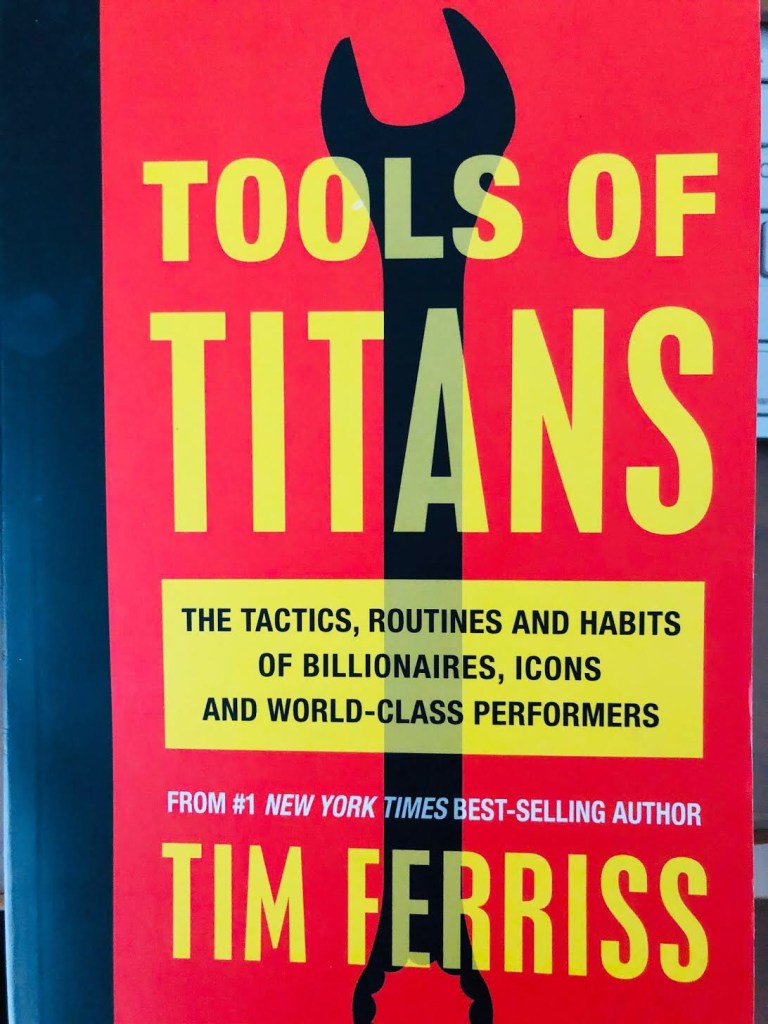
Tim Ferris
Tools/Tips for growth
Unit Plan Template
Reading comprehension, book review skills
Objectives: Identify the objectives for the unit and a table that shows 21st Century skills addressed. Use the objectives that you created in Unit 1.
| Objective | 21st Century Skills Addressed |
| To be able to comprehend reading materials with understanding of the conflicts, character development, and other literary features associated with the books | Comprehension/ Creativity |
| To be able to report back to class what they have read, and understood while reading | Communication Skills |
| To be able to listen to book reports of one another and respond with any questions and relevant feedback | Communication Skills |
Students should have some enthusiasm for reading and hence be able to initiate reading on their own, being able to analyze and comprehend some of the important components within the book.
Students will be presenting book reports on books that they have read for the week and hence the criteria of reading comprehension, level of analysis, organization of ideas, efficacy of presentation will be assessed. The book reports will be based on books that they have chosen (while the reading list with book reviews would be provided to ease their choice of book selection). Yet, since the books will be chosen by the students, they would be assessed on the books that they have chosen, and hence these varying reading levels will be taken into consideration and also their individual reading levels while assessing each criteria.
Lessons:What are the lessons that you will teach for this unit? How will you sequence the lessons that you will teach for this unit? Will your lessons be goal oriented, theme-based, or project-based? What strategies will you use to teach vocabulary to students of varying reading levels? Mention any other literacy skill covered in a lesson. What follows this unit?
Differentiating Instruction: How will you differentiate the product, content, and/or process for the various needs, preferences and readiness levels of your students? How will you differentiate the lesson for students with varying reading levels, disabilities and English language learners?
For students with varying reading levels, they will be provided again the choice to choose books appropriate to their reading levels concerning the book reports. For more difficult reading that we would be covering like Shakespeare drama in class, relatively easy to understand summaries would be provided to help with their understanding.
Next Steps: What will you do after the unit? Review, re-teach, extend, or move to the next unit?
I will try to review what they have learned by giving short quizzes, or giving written assignments to make sure they have acquired the necessary skills for the given unit. And then I would re-teach any recurring themes or areas that many of the students struggle to understand, extending the unit by relevant time period. And then if I find that the majority of the class have acquired most of the skills necessary for the given unit, I would be moving ahead with the next relevant class material.
References: Add resources you used to create this unit plan (preferably in APA format).
https://educationcontents.school.blog/2020/04/22/edureading-book-summary-annotations-part-3
Refer to two of these blog posts websites for annotations of all reading materials recommended for the book review activity. The individual files can be manually downloaded from the blog.
YouTube video summarizing these review materialshttps://www.youtube.com/embed/oeFgQx3odAs?version=3&rel=1&fs=1&autohide=2&showsearch=0&showinfo=1&iv_load_policy=1&wmode=transparentAdvertisements
Unit Plan Template
Reading comprehension, book review skills
Objectives: Identify the objectives for the unit and a table that shows 21st Century skills addressed. Use the objectives that you created in Unit 1.
| Objective | 21st Century Skills Addressed |
| To be able to comprehend reading materials with understanding of the conflicts, character development, and other literary features associated with the books | Comprehension/ Creativity |
| To be able to report back to class what they have read, and understood while reading | Communication Skills |
| To be able to listen to book reports of one another and respond with any questions and relevant feedback | Communication Skills |
Students should have some enthusiasm for reading and hence be able to initiate reading on their own, being able to analyze and comprehend some of the important components within the book.
Students will be presenting book reports on books that they have read for the week and hence the criteria of reading comprehension, level of analysis, organization of ideas, efficacy of presentation will be assessed. The book reports will be based on books that they have chosen (while the reading list with book reviews would be provided to ease their choice of book selection). Yet, since the books will be chosen by the students, they would be assessed on the books that they have chosen, and hence these varying reading levels will be taken into consideration and also their individual reading levels while assessing each criteria.
Lessons: What are the lessons that you will teach for this unit? How will you sequence the lessons that you will teach for this unit? Will your lessons be goal oriented, theme-based, or project-based? What strategies will you use to teach vocabulary to students of varying reading levels? Mention any other literacy skill covered in a lesson. What follows this unit?
Differentiating Instruction: How will you differentiate the product, content, and/or process for the various needs, preferences and readiness levels of your students? How will you differentiate the lesson for students with varying reading levels, disabilities and English language learners?
For students with varying reading levels, they will be provided again the choice to choose books appropriate to their reading levels concerning the book reports. For more difficult reading that we would be covering like Shakespeare drama in class, relatively easy to understand summaries would be provided to help with their understanding.
Next Steps: What will you do after the unit? Review, re-teach, extend, or move to the next unit?
I will try to review what they have learned by giving short quizzes, or giving written assignments to make sure they have acquired the necessary skills for the given unit. And then I would re-teach any recurring themes or areas that many of the students struggle to understand, extending the unit by relevant time period. And then if I find that the majority of the class have acquired most of the skills necessary for the given unit, I would be moving ahead with the next relevant class material.
References: Add resources you used to create this unit plan (preferably in APA format).
https://wordpress.com/read/blogs/171403953/posts/1668
https://educationcontents.school.blog/2020/04/22/edureading-book-summary-annotations-part-3/
Refer to two of these blog posts websites for annotations of all reading materials recommended for the book review activity. The individual files can be manually downloaded from the blog.
YouTube video summarizing these review materials

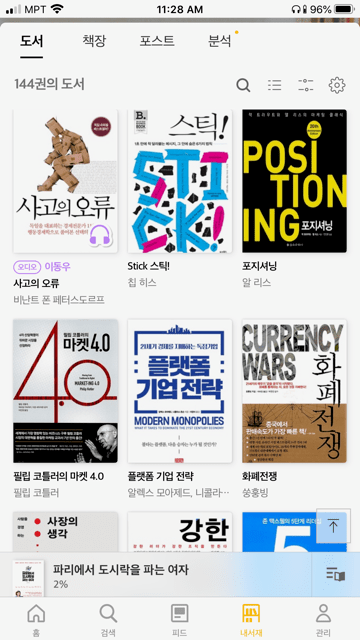

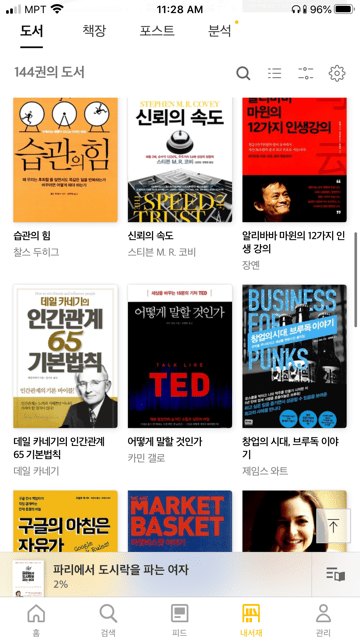

켈리최 추천도서: 한 분야에 100권을 읽으면 그 분야의 학위를 따는거나 다름 없다. 앞으로 남은 한달 가량의 시간 가운데 나머지 70권 분량의 책을 어떤 책들로 채워 나가야 할까? 켈리케 추천 도서를 30개 가량 다운로드 해 놓았는데 열심히 읽으며 기록하며 마인드맵 형식으로 이 책들이 계속해서 나의 독서 리스트들을 뻗어나가게 했으면 한다.
시장 조사를 하라 사실 내가 학교에 가는 이유도 더 크게 보면 학교 시장과 학생들의 필요(니즈)와 형태를 살피고 내가 앞으로 교육계에 몸 담을 사람으로서 학생들의 필요를 파악하며 학생들과의 호흡을 맞췆보는 것이 중요하다 여기기 때문이다. 부모님들과 또한 다른 선생님들과의 교류를 통해서 교육분야의 필요들을 발견하고 그 가운데서 나의 인사이트와 노하우를 개발하며 접목하는 것이 나의 목표이며 나의 궁극적인 자세이다.
 EduContents